
In the world of skiing and snowboarding, goggles are an essential accessory.
The color of the lens is particularly important, as it can have a significant impact on the brightness and contrast of your field of vision.
This time, we will focus on choosing lens colors and provide detailed explanations on basic knowledge and how to use lenses according to the weather.
This will increase your safety on the snowy mountains and allow you to enjoy a comfortable ride.
The person writing this article is Naraoka, who has worked for Salomon, one of the world's most famous winter sports companies, and currently holds a snowboard instructor license.
From my experience, I would like to tell you the following:
- Why wear snowboard goggles?
- Things to look out for when buying goggles
- Differences between lens colors and recommended colors

Why wear snowboard goggles?
 Snowboard goggles are more than just a fashion item.
The primary function of goggles is to protect your eyes.
This includes:
- Protect your eyes from snow, ice, tree branches, and pebbles
- Protect your eyes from strong sunlight and UV rays
- Protect yourself from impacts from other people's skis and poles
- Protect your eyes from strong winds
Includes:
More specifically, goggles act as a protector to protect your face in the event of a fall, and also prevent snow blindness (eye inflammation caused by ultraviolet rays), reducing various risks compared to not wearing goggles.
The quality of the coating on the goggles' surface is also important and has a significant impact on visibility in bad weather.
By choosing goggles with a high-quality coating that allows you to accurately see the unevenness of the slope and the wind flow, you can enjoy snowboarding at a higher level.
Points to consider when choosing goggles
 So far, we have explained the role of goggles, but from here on, let's think about how to actually choose goggles.
- Does it fit?
- Is it designed to be anti-fogging?
- Is visibility ensured?
- Is it compatible with glasses?
- Which color lenses suit me?
Does it fit?
When choosing snowboard goggles, many people tend to focus on the appearance and lens color, but the most important thing is how the goggles fit.
The fit of your goggles determines how effective they are and directly affects how comfortable you will be while skiing or snowboarding. While you can change the appearance and lens color, you cannot change the fit.
To check the fit, pay particular attention to the nose area.
It is important to check that there are no gaps or looseness in the nose area.
Compared to Westerners, Asians have wider and lower noses, so overseas products may not fit around the nose, causing them to fog up easily or causing excessive pressure.
To avoid this, we recommend choosing goggles that are "Japan Fit Model" and are designed to fit the Japanese skeletal structure.
The shape of the frame and face form (the sponge part around the face) is also important.
If the fit is poor, the glasses will fog up while you are skiing, and wind will get in through the gaps, causing your eyes to become dry and sore, making them unsafe to use.
When purchasing goggles, it's important to try them on your face if possible.
This allows you to check the actual fit and comfort.
Choosing the right goggles will help you get the most out of your skiing or snowboarding experience.
Is it designed to be anti-fogging?
Whether or not your goggle lenses fog up will have a big impact on your comfort when snowboarding or skiing.
Choosing anti-fog goggles is important for a safe and comfortable skiing experience.
The most recommended way to prevent fogging is to use goggles with "double lenses."
A double lens is a design that uses two lenses with a layer of air between them.
This air layer reduces the temperature difference between the cold air outside the lens and the warm air inside the lens, significantly reducing fogging.
In addition, the double lenses are less likely to freeze during a snowstorm, so your vision will remain clear.
Additionally, goggles with anti-fog or spherical lenses are also recommended.
These are even less likely to fog up than regular types, keeping your vision clear.
Goggles with adjustable lenses for ventilation are also effective in preventing fogging.
By choosing goggles with these features, you will be able to enjoy snowboarding safely and comfortably.
Is visibility ensured?
To enjoy snowboarding or skiing safely, it is important to ensure a wide field of vision through your goggles.
By accurately understanding the conditions on the slope and the movements of other skiers and snowboarders, it is possible to avoid unexpected falls and dangerous collisions.
Visual information is especially important when skiing at high speeds.
For this reason, it is advisable to choose goggles that offer a wide field of view.
There are two types of goggle lenses: flat lenses and spherical lenses.
Flat lenses are not as curved as spherical lenses, so they are closer to the eyes and cause less distortion in the field of vision.
On the other hand, spherical lenses have a rounded, arched shape, which increases the distance between the lens and the eye, providing a wider field of view and reducing fogging, while also making the lens itself more durable.
It also provides excellent eye protection in case of a fall, so you can use it with confidence.
In addition, frameless goggles have no frame around the lens, which not only provides a wider field of view, but also has the advantage of preventing snow from accumulating and fogging up.
Many models have easily interchangeable lenses, making them ideal for those who want to change lenses depending on the weather.
When skiing or snowboarding, it's important to take these features into consideration and choose goggles that suit your style and the conditions.
Ensuring a wide field of view makes for a safer and more enjoyable skiing experience.
Is it compatible with glasses?
For snowboarders and skiers who wear glasses, choosing snow goggles that are compatible with glasses is important.
If you wear goggles over your glasses, you should choose a specially designed glasses-compatible model to avoid the risk of your glasses slipping off or breaking in the event of a fall.
Glasses-compatible goggles have larger frames than regular goggles.
This large frame is necessary to ensure there is enough space to fit your glasses.
This ensures that your glasses fit properly and stay in place comfortably.
Additionally, the lenses are designed to fit the shape of your glasses, rather than the shape of your face, ensuring a secure fit.
For general goggles that are not glasses-compatible models, even large sizes are not necessarily designed to accommodate glasses, so it is recommended to choose a glasses-compatible model.
Skiers and snowboarders who wear glasses can enjoy a comfortable and safe skiing or snowboarding experience by choosing glasses-compatible goggles with these features.
Glasses-compatible goggles minimize the inconvenience of wearing glasses while maintaining clear vision.
Which color lenses suit me?
The color of the lenses can make a big difference to your visibility when skiing or snowboarding.
The weather at ski resorts changes constantly, so it's important to choose the right lens color for the conditions.
The lens color adjusts the light and makes it easier to see the unevenness of the snow surface.
There are various types of lens colors, and you should choose the appropriate one depending on the weather and the time of day you will be skiing, such as for sunny days, cloudy days, or snowy days.
For example, on sunny days, dark lenses will soften the sunlight and reduce glare on the snow.
On the other hand, on cloudy or snowy days, light-tinted lenses brighten the surroundings and improve visibility.
When purchasing goggles, many people tend to be attracted to the appearance of the frame and band, but it is important to understand how different lens colors affect your vision and make your selection accordingly.
Additionally, choosing goggles with interchangeable lenses allows you to adapt flexibly to changing weather conditions.
By choosing the lens color that best suits the weather and lighting conditions, you can optimize your vision and make skiing or snowboarding more enjoyable.
We'll show you how to choose specific colors in the next section!
Differences between lens colors
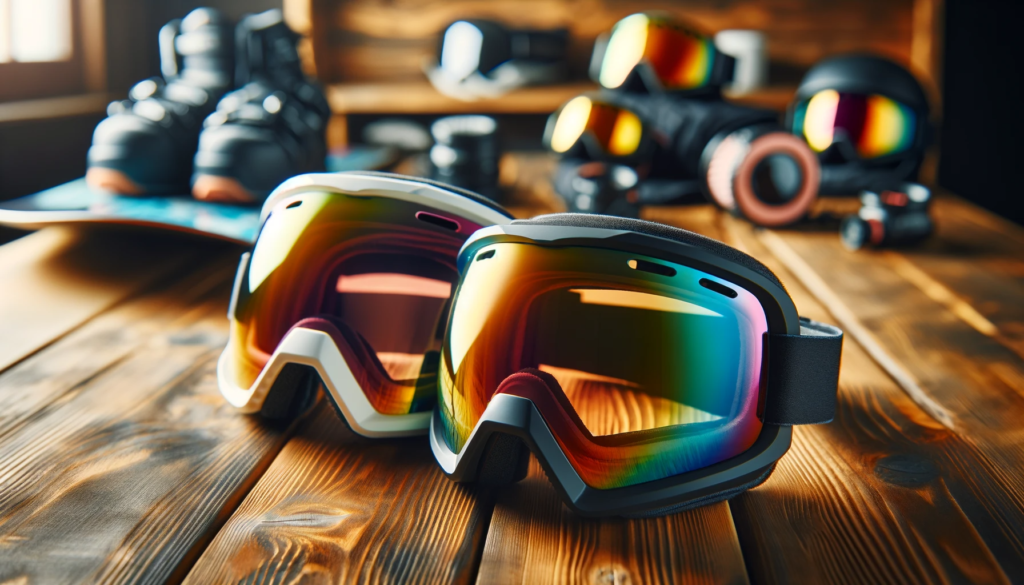 From here, we will take a closer look at the differences between goggle colors and which color to use when.
- orange
- pink
- Yellow
- blue
- gray
- Clear
- About mirror lenses
orange
Orange lenses are extremely versatile when it comes to ski and snowboard goggles.
It reduces glare on sunny days and provides clear vision on cloudy days, providing stable visibility in any weather.
Orange lenses adjust the light intensity appropriately and reduce eye fatigue even when used for long periods of time, making them recommended for people who are sensitive to glare.
Orange lenses are easy to use regardless of the time of day or weather, making them a particularly recommended color for beginners to goggles.
Overall, orange snowboard goggles are a good choice for a wide range of skiers and snowboarders due to their versatility and comfortable viewing characteristics.
Such versatile lenses are extremely useful at ski resorts where the weather can change rapidly.
pink
Goggles with pink lenses are just as versatile as those with orange lenses.
This color is easy to use on sunny days, but is especially useful on snowy or cloudy days, brightening the overall view.
Pink lenses are also attractive as a fashion statement for women who enjoy snowboarding or skiing.
Another major benefit of pink lenses is the enhanced contrast they provide.
This characteristic makes it easier to clearly see unevenness on the snow surface.
This is an important factor in increasing safety while gliding.
Additionally, it will improve your vision and may even improve your mood.
As such, pink lenses offer many benefits to snowboarders and skiers, both in terms of performance and appearance.
Yellow
Snow goggles with yellow lenses let in a lot of light, making them ideal for skiing in dark conditions such as cloudy days, at dusk, or at night.
In these conditions, yellow lenses allow you to see the unevenness of the snow surface more clearly, helping you ski safely.
However, in bright conditions, such as on a sunny day, yellow lenses can cause glare.
For this reason, it is often not suitable for sunny weather.
We recommend using it in dark environments such as cloudy days, night skiing, and indoor slopes.
For these reasons, yellow lenses are ideal for skiing in bad weather and low light conditions, providing a safe and comfortable skiing experience.
However, you should consider the environment in which you will be using the lenses when making your selection, and we recommend considering other lens colors when using them in bright conditions such as on sunny days.
blue
Snow goggles with blue lenses offer excellent performance, especially when skiing or snowboarding on sunny days.
Blue lenses have high contrast, effectively reducing the glare of sunlight while also allowing you to see the unevenness of the snow surface clearly.
Because it has the ability to cut out yellow light, it is suitable for use at times when the light is soft, such as at dusk.
This feature is particularly advantageous on sunny days, reducing stress on the eyes and supporting a comfortable skiing experience.
However, blue lenses tend to make it slightly harder to see in dark conditions such as on cloudy days or at night games.
Therefore, it is best suited for use on clear days or at dusk, but may not be suitable for use on cloudy days or at night.
Blue lens goggles are recommended for children to ski during school P.E. classes.
When children wear them during daytime classes, blue lenses cut out reflected light on the slopes, helping them ski without stress.
On sunny days, blue is considered to be a color that is easy to see and does not cause stress to the eyes.
gray
Snow goggles with grey lenses are ideal for skiing and snowboarding, especially on sunny days.
These lenses are better at reducing the glare of sunlight than orange or pink lenses, making them ideal for skiing on sunny days.
Grey lenses provide a natural view and reduce eye strain.
On sunny or snowy days, it effectively cuts glare and ensures comfortable visibility.
White and gray can be seen almost as if with the naked eye, as if a slight filter were applied.
This means that you won't feel too much glare and your field of vision will feel wider, making it a great choice for beginners.
However, in bad weather or low-light situations such as night games, the brightness may be insufficient and the field of vision may feel dark, so in such cases you will need to consider other lens colors.
Overall, goggles with grey lenses are ideal for skiing on sunny days, reducing eye strain and providing a natural view.
However, in low light conditions, you may want to consider choosing a different lens color.
Clear
Snow goggles with clear lenses are ideal for use in low light conditions.
This type of lens provides clear vision similar to that of the naked eye and is therefore recommended for use in bad weather, at night, and on indoor slopes.
However, clear lenses are not suitable for use on sunny days as they do not have the ability to filter out sunlight.
On sunny days and during bright hours, you are more likely to feel glare.
Therefore, it is recommended to choose a different lens color for sunny days.
Clear lens goggles are ideal for skiing in limited light conditions, such as at night or on indoor slopes, but they can be dazzling when skiing during the day, so you need to choose a pair that takes into account the environment in which you will be using them.
About mirror lenses
Snowboard goggles with mirrored lenses are ideal for use especially on sunny days.
This type of lens has light-reflecting properties, making it gentle on the eyes even in strong sunlight and reducing eye fatigue.
This makes it extremely effective in clear weather and provides a comfortable view.
Another major advantage of mirrored lenses is that your eyes cannot be seen from the outside.
This allows facial expressions to be hidden, making it popular with snowboarders who want privacy and those who value design.
The mirrored finish of the mirror lenses also looks stylish and is a favorite among many snowboarding enthusiasts.
However, mirror lenses have the disadvantage of being difficult to use in dark conditions such as on cloudy days or at night.
Therefore, it is recommended that you have a different lens for bad weather or night skiing, or choose a bright mirrored lens suitable for cloudy days.
Mirror lenses are ideal for bright, sunny days and are also excellent for protecting privacy by making it difficult for players to see their faces from outside.
However, since visibility will be reduced, they are not suitable for cloudy days, night skiing, or indoor slopes, so you need to choose them based on the situation in which you will be using them.
What colors should a beginner choose?
 For beginner snowboarders, goggles with orange or pink lenses are ideal as they can be used in changeable weather.
These lenses are versatile and adaptable to many situations, making them an easy choice for beginners.
Orange lenses are suitable for both sunny and cloudy days and make the unevenness of the snow surface more visible.
On the other hand, pink lenses have a strong contrast, making it easier to see unevenness in the snow surface and making the field of view brighter.
These lenses are comfortable to wear in a wide range of weather conditions, from sunny to overcast.
When choosing goggles for beginners, it is recommended to choose orange or pink lenses.
summary
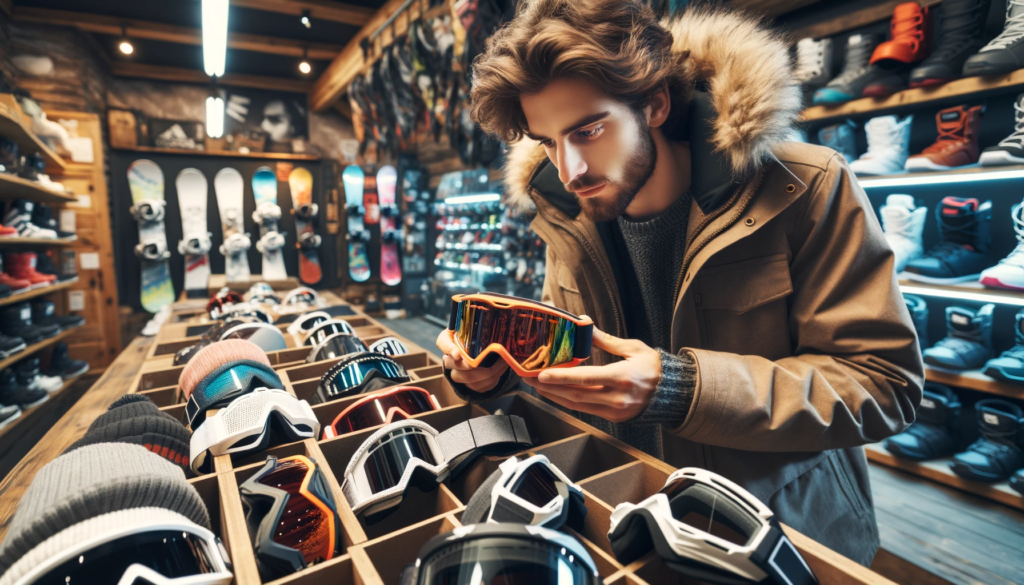 When choosing goggles for snowboarding, it is important to prioritize comfort and safety. Choosing goggles requires careful consideration not only of design and price, but also of the environment and purpose in which they will be used.
For example, if you plan to do a lot of skiing in snowstorms, you'll need a lens tint that allows for good visibility.
Also, even if you prioritize design and color, it's important not to sacrifice functionality.
When choosing goggles that are right for you, it is important to consider the weather and environment in which you will be using them, and to choose a pair that strikes a good balance between ease of viewing and functionality.
Choosing the right goggles will make your snowboarding experience safer and more comfortable.
