
この記事を監修した人

Kazu
OwlOptical代表。
かつては大手スノーボードメーカーに勤務し、現在もスノーボードインストラクターの資格を保有するスノーボード愛好者。2022年に楽天市場で自らのスノーボードショップを開業後、業界の古い商習慣に違和感を感じ、雪山の楽しさを伝えるために、高品質で適正価格の商品を提供するブランド「OWL optical」を立ち上げる。


Anti-fog products for snowboard goggles are essential for enjoying the action of snow sports safely and comfortably.
When choosing snowboard goggles, it is important to carefully check the compatibility with the lenses, how long the effect lasts, and how much effort is required to reapply.
Although recent goggles have improved in performance to make them less prone to fogging, they can still fogging up after prolonged use, making anti-fog treatment essential. There are also an increasing number of easy-to-use products available, many of which are easy to apply.
In this article, we will briefly explain the causes of goggle fogging, and then explain the types of anti-fog products and how to use them properly!
The editor of this article is Naraoka, who runs a snowboarding e-commerce site and has experience snowboarding himself.

The main causes of fogging up snowboard goggles
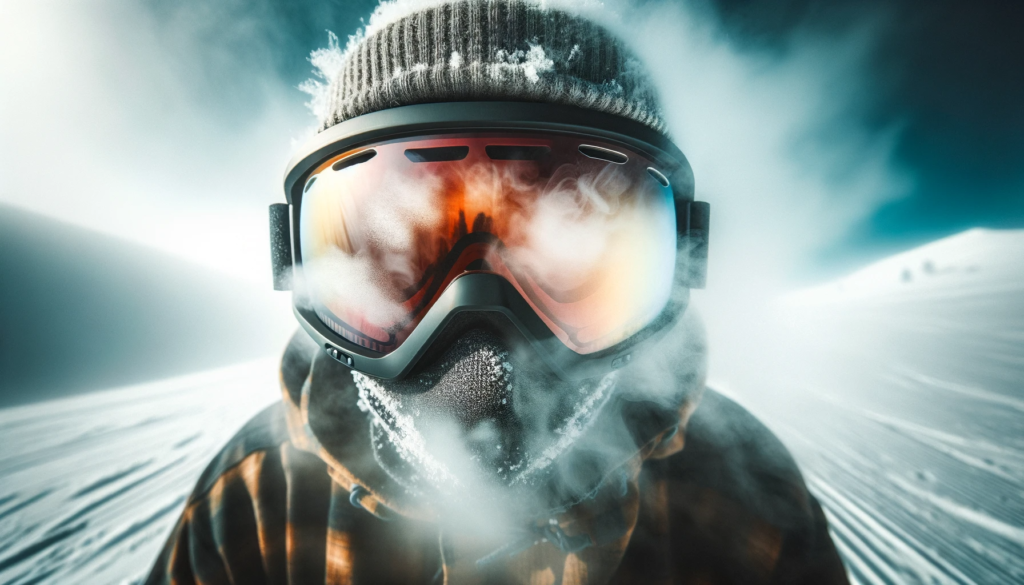 Before we introduce anti-fog solutions, let's take a look at why goggles fog up!
Broadly speaking, there are three types:
- Temperature difference between inside and outside of goggles
- Improperly fitted goggles
- The issue of face coverings
I will explain each one.
Temperature difference between inside and outside of goggles
The main reason snowboard goggles fog up is due to the temperature difference between inside and outside.
The temperature and humidity inside the goggles rise due to the skier's or snowboarder's body heat and breath.
The outside air is cold in winter, and this temperature difference causes condensation on the inside of the lens, turning water vapor into droplets.
When the warm, moist air inside the goggles comes into contact with the cold lens, the water vapor cools and turns into droplets, causing fogging.
It's the same phenomenon as when car windows fog up due to the heating inside.
Modern snowboard goggles try to alleviate this problem with dual lens construction, but they don't prevent all fogging.
If snow gets into your goggles, they will become even more humid and more likely to fog up.
Effective measures include making sure the air vents in your goggles are not blocked and wiping down the inside regularly in humid environments.
By understanding this and managing it correctly, you can maintain clear, comfortable vision.
Improperly fitted goggles
One of the reasons snowboard goggles fog up is due to improper fit.
Goggles that don't fit your face properly can create gaps that allow moisture and snow to get inside, increasing the chance of the lenses fogging up.
When choosing goggles with spherical lenses, it's especially important to choose a model that fits the shape of your face.
Japanese brand goggles, designed to fit Asian faces or take into account the facial features of Japanese people, are designed to solve this problem and are effective in preventing lens fogging.
A proper fit is essential to maximizing the performance of your goggles and maintaining a clear view.
Choosing goggles that fit snugly around your nose and cheeks is important for enjoying snowboarding comfortably.
The issue of face coverings
Face masks and neck warmers are essential accessories for snowboarding, but wearing them improperly can cause your goggles to fog up.
If you wear these under your goggles, your warm breath may flow back into the lenses, causing condensation.
To avoid this issue, we recommend clipping a face mask or neck warmer onto the goggle straps.
This will prevent the warm air from your breath from entering the goggles directly, keeping them less likely to fog up.
It is also effective to fold the top of the mask over.
This allows for improved airflow inside the goggles, keeping your vision clear, while still providing the warmth and sun protection benefits.
Proper fitting plays a key role in preventing fogging.
How to choose the right goggles to prevent fogging
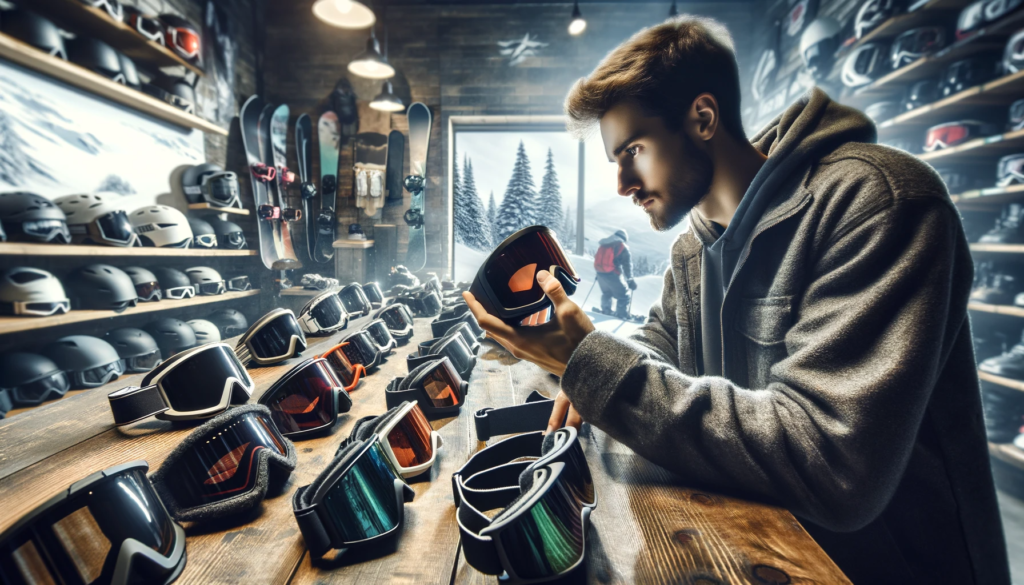 Before we explain anti-fog measures, we will briefly introduce how to choose goggles that are less likely to fog up.
Proper fit
The most important thing to consider when choosing snowboard goggles is a good fit.
Goggles that fit snugly to your face minimize gaps, keeping snow and cold air out and significantly reducing fogging.
When trying on the goggles, it is essential to check that they fit snugly against each part of your face, especially your forehead, bridge of your nose, and cheeks.
Goggles designed to fit the Japanese skeletal structure, such as Asian fit models, not only prevent fogging but also provide a comfortable fit.
A proper fit that doesn't feel restrictive ensures safety and clear vision, improving your snowboarding experience.
Well-fitting goggles are key to staying comfortable and focused while preventing annoying fogging.
Use double lens goggles
The double lens structure of the goggles reduces the temperature difference between the inside and outside and prevents condensation.
This structure prevents the inner lens from coming into direct contact with the cold air outside, effectively preventing fogging caused by temperature differences between inside and outside the lens.
To prevent fogging, it is important to check whether your goggles have double lenses when choosing them.
Cheaper models may use a single lens, which has the disadvantage of being prone to fogging.
To ensure safe and clear vision, we recommend purchasing a double lens model.
However, even double lenses require proper handling, and care must be taken to prevent condensation caused by sweat or moisture.
Types of anti-fog products
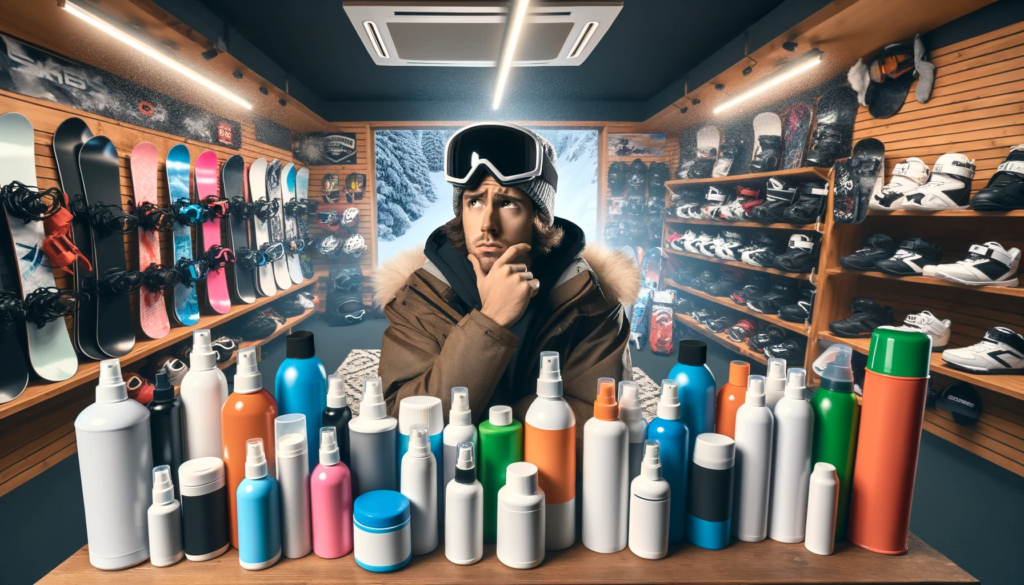 From here on, we will introduce the different types of anti-fog products, considering the advantages and disadvantages of each.
Spray type
Spray-type anti-fog products are ideal for preventing fogging on ski and snowboard goggles.
Its ease of use is particularly evident when used on the slopes.
Compared to bottle-type products, a major advantage is that it is easy to use even when wearing gloves.
Even with gloves on, a single spray can cover a large area of the goggles, forming a uniform film.
This is because it is easier to handle and eliminates the need to adjust the amount compared to applying drops directly to the goggles.
However, there are some things to be careful about when using spray types.
Aerosol spray cans may explode in high temperatures, so they should not be used near heating appliances.
In particular, snow resorts often have heated indoor spaces, so special care must be taken when handling them in such environments.
It is also not suitable for carrying on an airplane.
If you are concerned about safety, it is wise to choose an aerosol-free mist type.
This makes it a safer option when using it near heating appliances such as stoves.
In conclusion, spray-type anti-fog agents are very useful when you need quick and easy protection from fogging during outdoor activities such as on the slopes.
However, it is important to carefully consider the environment in which you will be using the goggles and the type of goggles you will be using, and choose a safe and appropriate product.
Gel type
Gel-type anti-fog products provide skiers, snowboarders, and other athletes with clear vision for extended periods of time.
Unlike spray types that are easy to use, gel tends to remain on the lens surface due to its high viscosity, making it more effective and long-lasting.
This solves the problem of liquid anti-fog easily evaporating from goggles, ensuring consistent performance.
Another benefit is that it does not easily run off after application.
This means that the anti-fog coating is less likely to come off the lens, even in windy conditions or during activities with lots of sudden movements, helping you maintain clear vision for longer.
To use, simply take an appropriate amount onto your fingertips and spread it evenly over the inside of the lens.
It is easy to use and its effects last much longer than spray types.
Especially in winter sports, applying it thoroughly before starting an activity will allow you to focus on maintaining your vision, leading to a safe and comfortable sports experience.
Its compact size makes it easy to carry, so you can put it in your pocket when you're out and about and reapply it whenever needed.
Applying it in your car or lodge before heading out will maximize the effect and allow you to enjoy long runs without interruption.
Although it is inferior to the spray type in terms of convenience and immediacy, the gel type is the best choice if you prioritize long-lasting effects.
We recommend this product as a reliable anti-fog product, especially when engaging in leisure activities or sports in cold climates.
Mousse type
Mousse-type anti-fog products are outstanding for their ease of use.
It is designed to solve the problem of spray-type anti-fog liquid dripping and staining the surrounding area.
This type comes out as fine bubbles rather than a liquid, so it can be applied precisely to the desired area, and there is no need to worry about the chemicals getting on the goggle band or other parts.
The advantage of the mousse type is that it is not only less likely to drip, but also does not splash, so it can be used indoors or in public places without making a mess.
However, the disadvantage of mousse-type anti-fog products is that they require effort to release the gas after use and to spread the foam evenly.
Therefore, it may not be suitable for those who don't mind putting in the effort.
Still, for those who don't mind the extra effort, mousse formulas are a great option, offering long-lasting results and ease of use.
In addition, the foam adheres firmly to the lens, providing long-lasting anti-fog protection, making it especially recommended for users who want to maintain clear vision during outdoor activities or sports.
Sheet type
Sheet-type anti-fog products are popular with many users because of their ease of use.
Its main feature is that it has both anti-fog and cleaning properties.
This allows you to clean the lenses after each use, keeping your goggles fresh.
This type is also disposable, making it hygienic.
The ease of applying anti-fog by simply wiping the lens during a break is a major advantage when outdoors or playing sports.
Because they are individually packaged, there is less risk of them drying out compared to liquid anti-fog products, and you can keep them in your pocket to keep your lenses clean at all times.
Not only will this make it easier to maintain your lenses, but it will also help keep your vision clear, which is likely to increase your safety and comfort during activities.
Cross Type
Cross-type anti-fog devices are gaining attention for their convenience.
It's very simple to use; just wipe the lens with the cloth to prevent fogging.
In particular, if the goggle lenses have a variety of coatings, many products are also compatible with mirror coatings and water-repellent coatings, making it possible to care for a wide range of lenses with just one product.
The cross type has the great advantage of being compact and highly portable.
It can be carried comfortably during various outdoor activities, including winter sports such as skiing and snowboarding, making it ideal for those who want to keep their luggage to a minimum.
The advantage of this product is that it provides an anti-fog effect while wiping away dirt from the lens, allowing you to quickly ensure clear vision.
This will improve performance as well as safety.
Correct application of anti-fog paint
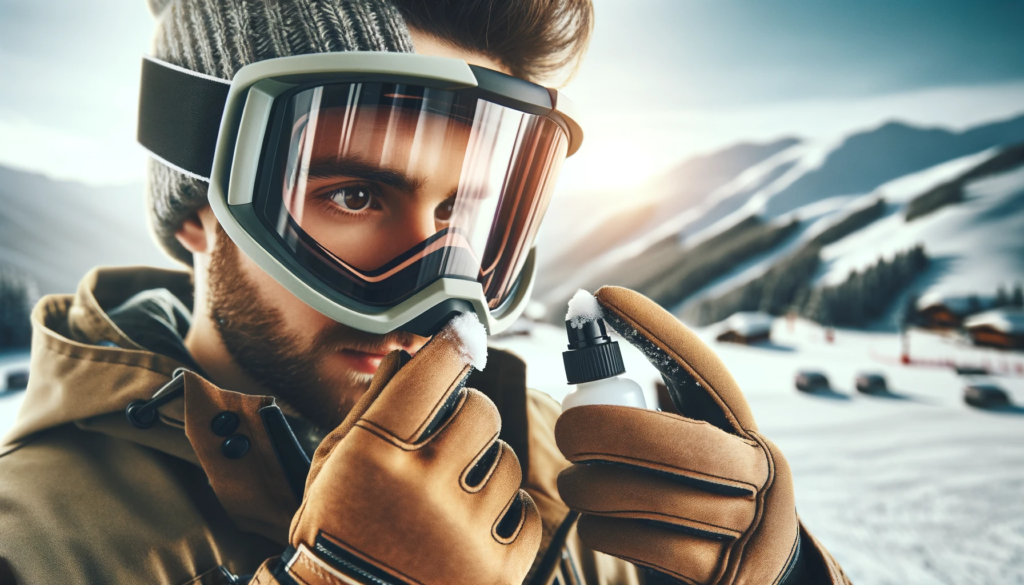 Proper application of anti-fog is an important step in maintaining clear vision.
Here we will explain how to do it step by step!
First, clean the goggle lenses with lens cleaner.
This is essential to maximize the effectiveness of the anti-fog and avoid the risk of scratching the lenses.
After cleaning, apply the recommended amount of anti-fog gel (about the size of three grains of rice) to the lenses.
The key is to spread it evenly with your fingers and cover every corner.
After application, wait 10-20 seconds as directed on the product, then gently wipe off with tissue.
Tissues are recommended because wiping cloths made with the same ultra-fine fibers as lens cleaners may remove too much of the anti-fog agent.
The ideal time to wipe it off is when the gel is half dry.
If the surface is completely dry or too wet, the anti-fog agent will not work properly and will not wipe off easily.
Following these steps will ensure that the anti-fog agent is effectively fixed to the lens, preventing fogging in areas prone to moisture accumulation or where the agent is not applied.
By applying it correctly, you can ensure that the anti-fog agent is 100% effective and maintain safe and comfortable vision.
Points to consider when choosing and purchasing anti-fog products
 So far, we have introduced the types of anti-fog products and how to use them.
So, how do you choose the right anti-fog product?
- Compatibility between goggle material and anti-fog agent
- Does it contain fluoride?
- How to choose an anti-fog lens that fits your budget
Compatibility between goggle material and anti-fog agent
When choosing goggles, it is important to determine the compatibility between the lens material and the anti-fog coating.
Many snowboard goggles have special coatings such as mirror coatings or water-repellent coatings, and you must choose an appropriate anti-fog product for these lenses.
In particular, with mirror-coated lenses, there is a risk that the anti-fog ingredients may react and damage the coating, so it is important to check that the anti-fog you use is compatible with the coating.
When purchasing anti-fog, first check whether the goggle lenses are specially treated.
If the lens is not treated or the treatment has deteriorated, you can use a general anti-fog agent, but if you apply an inappropriate anti-fog agent to a lens that has been treated with an anti-fog coating, you may remove the coating.
When purchasing, it is also important to consider how long the anti-fog effect lasts and how often it needs to be reapplied.
If you plan to use the glasses for long periods of time, it is best to choose a long-lasting anti-fog coating.
Also, depending on the type of coating on the lenses, anti-fog may not be usable, so please refer to the product description and reviews, and also read the experiences of other users.
When choosing an anti-fog product for lenses with a coating, you need to choose one that is specifically designed for that coating.
By using anti-fog products that are compatible with the special lens processing, you can protect your lenses while maintaining clear vision.
Does it contain fluoride?
When choosing an anti-fog product, choose one that contains fluorine, as the fluorine creates a strong protective film on the lens surface, making it easier for the anti-fog ingredients to stay in place for a long time.
This property reduces condensation and keeps the lenses from fogging up for a long time. Fluorine-containing anti-fog coatings are particularly effective when participating in long-term activities or snowboarding in environments with extreme temperature changes.
When purchasing, it's important to check the product description to see how the fluorine-based anti-fog agent interacts with the lenses and how long it will remain effective.
Clear vision is directly linked to safety and performance while snowboarding, so a long-lasting fluorine-based anti-fog solution is a smart choice for enjoying the sport with peace of mind.
How to choose an anti-fog lens that fits your budget
When engaging in winter sports such as snowboarding and skiing, anti-fog lenses are important for maintaining clear vision.
When choosing, it is important to first consider your budget and how often you will use it.
There are many anti-fog products on the market that cost less than 1,000 yen, but for intermediate or advanced users who use them frequently or who want longer-lasting effects, a high-quality product that costs more than 1,000 yen is more suitable.
If you're trying to save money, choose lower-priced items or consider buying them in value bundles.
If you plan to use it infrequently or only occasionally on snowy mountains, economical, low-priced items are recommended. However, if cost performance is your number one priority, it is important to choose something that offers a good balance between capacity and price.
For those who use it less frequently, a product with a smaller volume is recommended, while for those who ski frequently, a product with a larger volume is recommended as it can be used up without waste.
This allows you to use up the anti-fog you purchase within the season, optimizing costs while maintaining safe and comfortable vision.
How anti-fog affects goggle materials
 Goggle lenses are important for maintaining a clear field of vision when enjoying snowboarding or skiing, but choosing the wrong lenses can cause damage to the lenses.
Anti-fog coatings, in particular, must be used with care.
Some anti-fog products are mist-type products that are sprayed directly onto the lens, but if used incorrectly, these products can not only stain the surrounding area but also damage the lens.
In particular, the ingredients may harden into a white residue on the lens surface, and this white residue may be noticeable as dirt.
Additionally, many goggle lenses have special coatings, so you need to choose an anti-fog solution that won't damage this coating.
General anti-fog products are suitable for goggles that already have reduced anti-fog properties or that do not have special coatings.
For specially treated lenses, it is wise to consider using a non-splattering mousse or cloth type anti-fog product to avoid damaging the treatment.
To avoid these issues, it's important to check the lens material and finish, choose the right anti-fog solution by following product reviews and manufacturer instructions, and follow the proper usage instructions.
To extend the life of your lenses and maintain safe and comfortable vision, be sure to choose your anti-fog product carefully.
Anti-fog alternative
 If you don't have anti-fog spray for your snowboard or ski goggles, you can use items you have around the house as a substitute.
However, in that case, there are also disadvantages.
Anti-fog sheets for glasses can temporarily prevent fogging by simply applying them.
However, the effects do not last long, so it is best suited for short-term activities.
You can also use toothpaste (make sure it's non-abrasive), but you should be very careful with this as it can scratch the lenses.
If you use dish soap (neutral detergent), you can achieve anti-fogging by applying a small amount of detergent directly to the lens and then rinsing it immediately with water.
If there is any old coating remaining, it is recommended to first remove it with toothpaste, then use detergent.
Lip balm and petroleum jelly are not recommended as they attract dirt and dust.
While these methods offer a quick fix compared to over-the-counter anti-fog products, they should be tried with caution and with the risk of potential damage to the goggle lenses in mind.
Always follow the product's recommended care instructions and use alternatives only with due care and understanding of their precautions.
summary
 Anti-fog goggles are an essential item for enjoying skiing and snowboarding.
In this article, we've introduced the different types of anti-fog and how to choose the right one.
Anti-fogging measures are essential to ensure visibility and enjoyment on snowy mountains safely.
It is important to choose a product that suits your usage environment and preferences, such as commercially available spray, mousse, gel, or fluorine-containing anti-fog products.
Additionally, by choosing a multifunctional anti-fog product that can be used for more than just goggles, you can apply it to everyday life as well.
Use this article as a reference to choose the right anti-fog solution and enjoy safe and comfortable winter sports.
この記事を監修した人
Kazu
OwlOptical代表。
かつては大手スノーボードメーカーに勤務し、現在もスノーボードインストラクターの資格を保有するスノーボード愛好者。2022年に楽天市場で自らのスノーボードショップを開業後、業界の古い商習慣に違和感を感じ、雪山の楽しさを伝えるために、高品質で適正価格の商品を提供するブランド「OWL optical」を立ち上げる。
 今日の支払いは¥0
 お試し期間
お試し期間
 お支払い
お支払い