
"I want to wear stylish snowboard goggles while still wearing my glasses!"
If you're a snowboarder who normally wears glasses, you've probably thought this at least once.
General goggles are designed with a large curve or a compact shape to suit the user's face shape and safety, so there is not enough space inside the goggles to store eyeglasses.
Therefore, if you do not choose goggles designed for snowboarding, there is a risk that your glasses will break or the lenses will crack in the event of a fall or impact, posing a threat to the user's safety.
For those of you who are in this situation, I, who run a snowboarding e-commerce site and have been snowboarding for over 15 years, will give you a thorough explanation of snowboard goggles for glasses.

What is the difference between regular goggles and goggles for glasses?
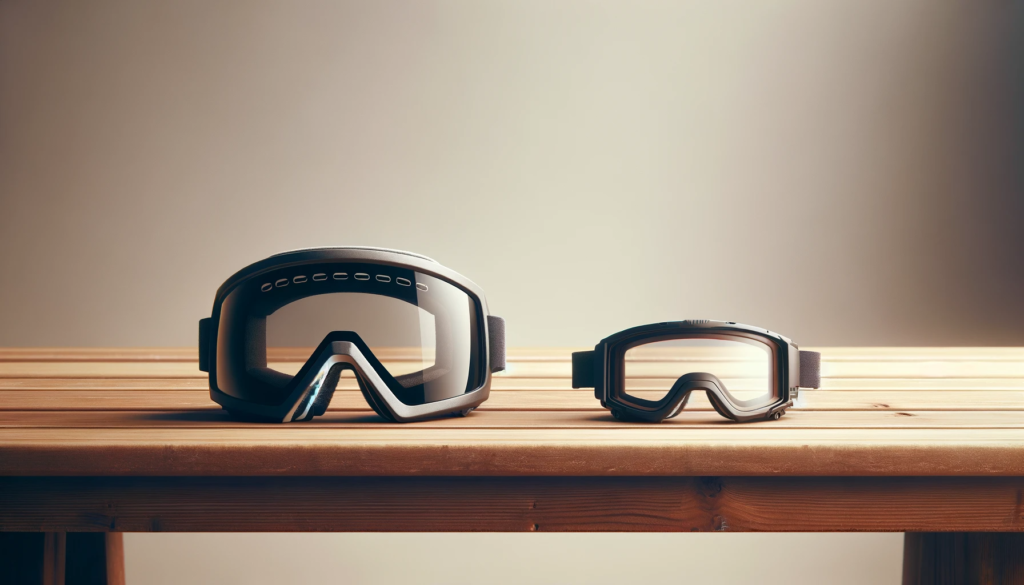
Differences from regular goggles: 1. The frame is larger than regular snowboard goggles.
The difference between glasses-compatible goggles and regular goggles is that the frames are larger.
This is because glasses fit properly when there is enough space between your face and the lenses.
Additionally, the lenses are designed to fit the shape of the glasses rather than following the curvature of the face, ensuring a comfortable fit.
Another key difference between regular goggles and glasses-compatible models is that they feature a special shape that prevents interference between the frame and the temples of your glasses.
This design makes the goggles comfortable to wear and is intended for use with glasses.
Some manufacturers and models offer goggles that are the same size or larger than glasses-compatible models, but be aware that these are not necessarily designed to accommodate glasses.
Difference from regular goggles②Sponge
One of the differences between regular goggles and goggles compatible with glasses is the design of the sponge.
Glasses-compatible goggles have a special notch in the foam attached to the frame that prevents the frame of the glasses from pressing against the foam.
Additionally, the goggles have recesses in the frame and foam that allow for proper spacing between your glasses and the goggles, minimizing interference.
This design is designed to allow eyeglass wearers to be active and comfortable.
Can I use my glasses as snowboard goggles?
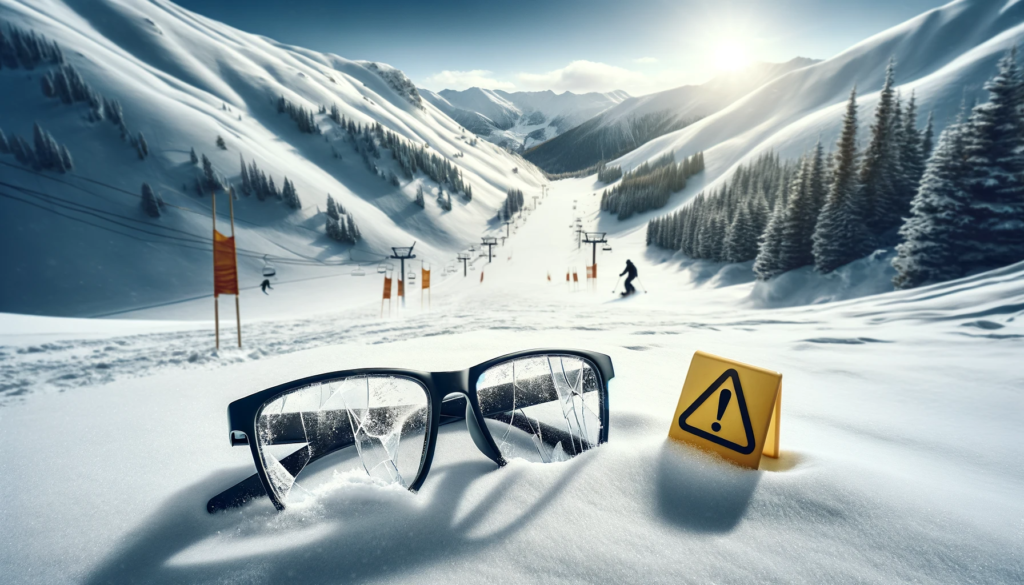
Using your glasses as ski goggles is an extremely dangerous option.
While glasses certainly perform the basic function of protecting against rain, snow, and UV rays, they also pose a significant risk when considering the risk of falling on the slopes.
This poses a safety risk as your glasses may come off in the event of a fall, increasing the risk of damage to your face.
Of course, glasses also have the advantage of being well ventilated and less likely to fog up.
However, modern goggles use advanced technology to improve breathability and fogging resistance.
In particular, goggles with double lenses and high ventilation are the best choice for ensuring safety while maintaining the comfort of glasses.
In conclusion, the best way to enjoy skiing or snowboarding safely and comfortably is to use eyeglass-compatible goggles.
If you consider both safety and performance, this is the obvious choice.
Glasses and goggles precautions
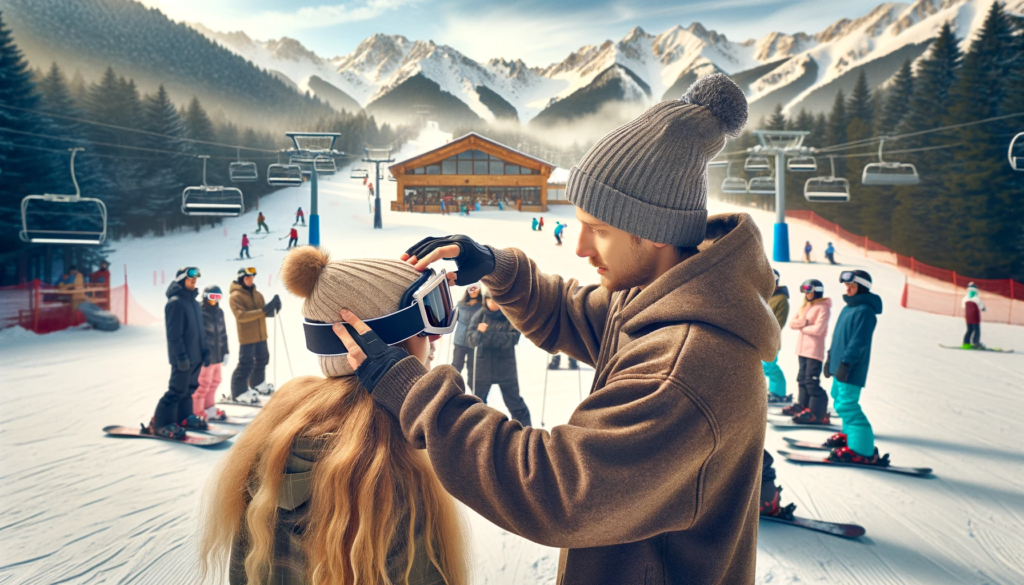
Caution 1. Board goggles fog up
Clear vision is extremely important when snowboarding or skiing.
However, various factors can cause goggles to fog up, which can hinder your safe skiing experience.
First of all, the main cause of goggle fogging is sweat from the body and the temperature difference between the face and the outside air.
In particular, if you wear glasses and also wear goggles, the lenses of your glasses are closer to your face than the lenses of the goggles, so they tend to fog up more easily.
Therefore, it is recommended to apply an anti-fog coating to the lenses of your glasses.
There are anti-fog products available on the market for both goggles and glasses, so choosing one that can be used on both materials can save you some hassle.
Another tip to keep your vision clear is to choose ski goggles with double lenses.
The double lens has a double structure that effectively prevents fogging caused by the temperature difference between inside and outside.
In addition, many goggle lenses are treated with an anti-fog coating, so by choosing these you can ensure an environment that is even less prone to fogging.
Finally, when handling your goggles, be careful not to touch the lens surface with your fingers.
Fingerprints and oils on the lenses can not only impair visibility but can also cause fogging.
Overall, choosing and maintaining your goggles is important to ensure good visibility while skiing.
Be sure to use anti-fog products and choose the right goggles to enjoy safe and comfortable snowboarding and skiing.
Note 2: The size of your glasses and snow goggles must match
When enjoying skiing or snowboarding, people with poor eyesight often use goggles that are compatible with glasses.
However, just because a product is eyeglass compatible does not mean it will fit all glasses.
There are subtle differences in the size and shape of eyeglass frames and the design of goggles.
The important thing is that the goggles fit your face and glasses perfectly.
If you use goggles that don't fit properly, the lenses may fog up more easily, or the glasses may press too hard against your face, causing pain.
Furthermore, if the impact of a fall is directly directed at your glasses or face, the risk of injury increases.
One thing to pay particular attention to is the size of the frame.
Glasses with large frames may not fit inside the goggles, and conversely, if the goggle frames are too large, the glasses may slip out of place inside the goggles.
The most reliable way to choose goggles is to try them on in a store and check the fit.
Similar precautions should be taken when purchasing items for children or when renting.
If you feel any discomfort around your eyes or ears, it is likely that the goggles are not suitable for you, so we recommend trying out several models.
In summary, for people with poor eyesight to enjoy snow sports safely, it is essential to make sure that their glasses and goggles are compatible.
Try on the goggles while wearing your own glasses to ensure you find the perfect fit.
Which snowboard goggles should glasses wearers use?
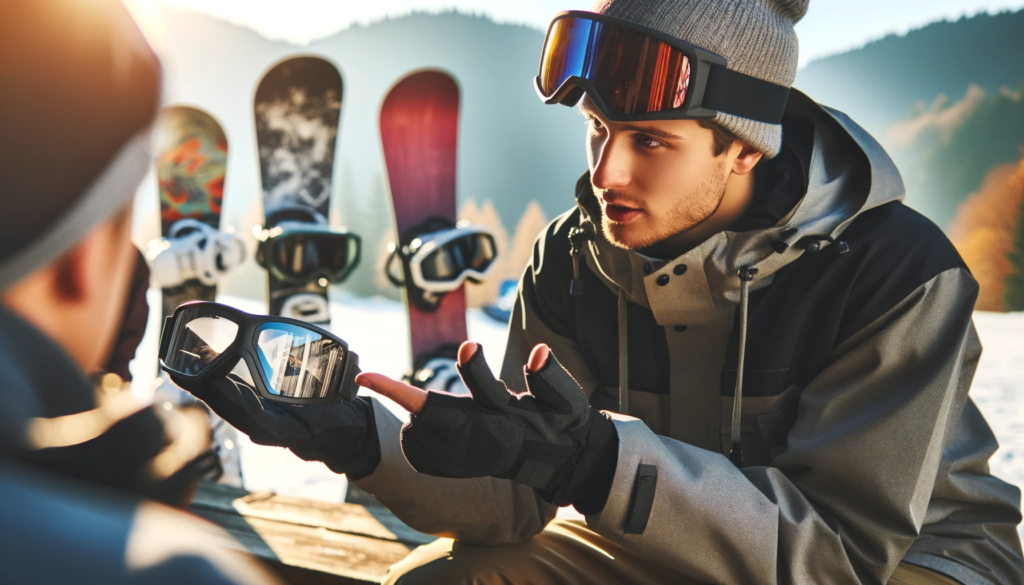
A helmet with a visor that can be used while wearing glasses
A helmet with a visor is, as the name suggests, a helmet with integrated goggles.
This type of helmet is especially popular among skiers.
The biggest advantage is that the helmet and goggles are integrated, so there is no need to worry about the goggles flying off.
Additionally, there are no gaps between the helmet and goggles, preventing cold air from entering and keeping your head warm.
It is also easy to operate, and the visor can be raised and lowered very smoothly.
In addition, some models allow you to remove the visor and use it as a regular helmet, so you can also wear regular goggles.
There are many benefits, especially for eyeglass wearers.
The design allows you to wear them even while wearing glasses, and the large visor provides a wide field of view and good ventilation, making them less likely to fog up.
If you have trouble with your goggles fogging up, this helmet with a visor is perfect for you.
The downside is that it combines the functions of both a helmet and goggles, so the price is a little high.
However, children's models are available at a relatively affordable price and there is less risk of losing goggles, making them a great choice for a family skiing experience.
Overall, helmets with visors are highly recommended for those who wear glasses or have trouble with fogging up their goggles, as the benefits outweigh the slightly higher price.
This helmet is the perfect choice for ski and snowboard enthusiasts looking for safety and comfort.
Prescription inner clip
Many people struggle to find goggles that fit their glasses comfortably and have a design they like.
This is where the "prescription inner clip" comes in.
Prescription inner grips refer to prescription lenses that can be attached to the inside of regular goggles.
This inner clip allows you to attach lenses that match your prescription to your goggles.
The result is clearer vision and improved performance when snowboarding or skiing.
Furthermore, the biggest advantage of prescription inner grips is that they are less likely to fog up than regular glasses.
Fogging can be a major obstacle when playing active sports, but using this inner clip reduces that worry.
Also, even if your glasses don't fit well or you don't like the design of the goggle model, you can still use them without any problems by using this inner clip.
It also reduces the risk of the goggles tightening at the sides and losing your glasses if the goggles fly off.
This makes prescription inner clips an excellent item that provides safety, security, and comfort all at the same time.
In summary, prescription inner clips are an innovative tool that solves a major problem for eyeglass wearers when enjoying winter sports.
Those who find it difficult and inconvenient to wear goggles over their glasses can use this inner clip to lead a more comfortable and active life.
Anti-fog board goggles
When enjoying snowboarding, fogging of goggles is one of the biggest problems.
Fog can reduce visibility, which can lead to reduced safety and hindered performance.
Here, we will explain how to choose anti-fog goggles and their features.
First of all, from the perspective of anti-fogging, snowboard goggles with spherical lenses are noteworthy.
These goggles have spherical lenses that are similar to the shape of the eye, and their main feature is that they give you a sense of distance to objects that is similar to that of the naked eye.
One thing to note is that while they are durable and anti-fogging, they may narrow your field of vision slightly, cause distortion, and tend to be more expensive.
Additionally, an increasing number of the latest snowboard goggles are equipped with high-performance anti-fog coatings.
In particular, the anti-fog coating applied directly to the lens maintains its anti-fog effect even after extended use.
The ventilation system at the top of the goggles releases moisture to the outside, helping to reduce fogging inside the goggles.
Additionally, goggles are now available with double lenses that are less likely to fog up, and with a function that allows you to adjust the position of the lenses to promote ventilation.
This makes them even less likely to fog up than regular types, allowing you to enjoy snowboarding more comfortably.
Finally, anti-fog functions are becoming very high spec, but when purchasing it is important to choose one that suits your usage environment and preferences.
Choose the right goggles to enjoy a safe and enjoyable snowboarding experience.
summary
 Activities on the slopes are fun but can be dangerous.
For skiers and snowboarders who require vision correction, choosing the right goggles is crucial.
From what we have introduced here, we can see that there are models that are "glasses compatible" or "glasses OK" that can be used comfortably even while wearing glasses.
These models are especially recommended for those who cannot wear contact lenses, and are specially designed to fit glasses comfortably and prevent fogging.
When purchasing, it is important to understand the differences in lens shape and function and choose according to your needs.
In particular, since it takes time to wipe off your glasses when your goggles fog up, it is important to choose a model that is less likely to fog up.
Also, by having your own goggles rather than renting them, you can keep costs down and enjoy using them for a longer period of time.
By keeping in mind the key points for selection, you can avoid making a mistake in choosing goggles and enjoy a safer and more comfortable life on the slopes.
Finally, we hope that this summary will help you choose the right goggles and enjoy skiing and snowboarding safely and with enjoyment.