
"I want to start snowboarding, but how do I set my stance?"
"I want to know the snowboarding stance that suits me best."
For those people, this article will explain the following:
- Snowboarding Stance Basics
- Things to check if you feel your stance is not right
- Stance tips to improve your snowboarding performance
Specifically, we'll show you how stance width and binding angle affect performance, and how to adjust them to help you progress from beginner to intermediate level.
By reading this article, you will be able to clear up any questions you may have about snowboard stance setting and enjoy more comfortable and safer snowboarding.

Snowboarding Stance Basics
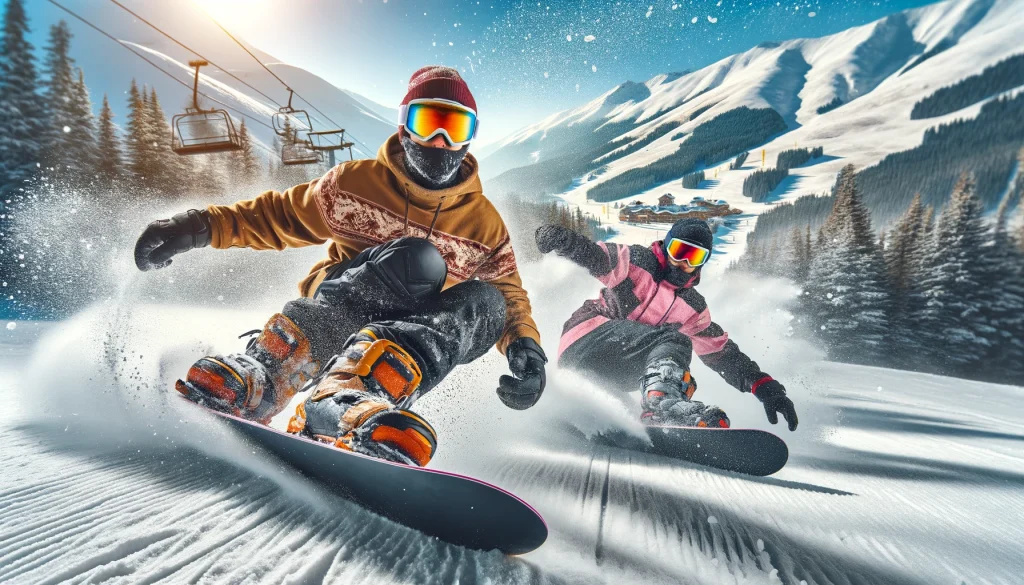
We will explain the basics of snowboarding stance below.
- Stance types and characteristics
- Should I choose regular or goofy?
Stance types and characteristics
In snowboarding, stance refers to how your boots are positioned on the board.
Your stance is determined by your supporting foot, which is placed on the nose (tip) of the board, and your dominant foot, which is placed on the tail (rear).
There are two main types of stance: regular stance and goofy stance.
In a regular stance, your left foot is on the nose and your right foot (your dominant foot) is on the tail.
Generally, your stance is determined by your dominant foot, and since most Japanese people are right-footed, many choose the regular stance.
On the other hand, the goofy stance is the opposite of the regular stance, with the right foot on the nose and the left foot on the tail.
Before you start snowboarding, you need to decide which stance you will use. This choice will affect the setup of your snowboard and is important information when renting.
Snowboarding stances depend on your individual body type and preferences, so it's important to figure out which stance suits you best.
Try both stances and find the style that suits you best.
Should I choose regular or goofy?
Many Japanese people are right-handed, and as a result many choose the regular stance, but some choose the goofy stance depending on their personal preference.
For beginners, it's important to try both on gentle slopes first to see which stance suits you best.
In addition to your dominant foot, your dominant eye and ease of skating are also important when choosing your stance.
For example, people who are left-footed tend to prefer a goofy stance, but if your dominant eye and foot are different, you can adjust the stance to suit your dominant eye.
However, since regular stance is common in snowboarding, beginners generally start practicing this stance.
Things to check if you feel your stance is not right
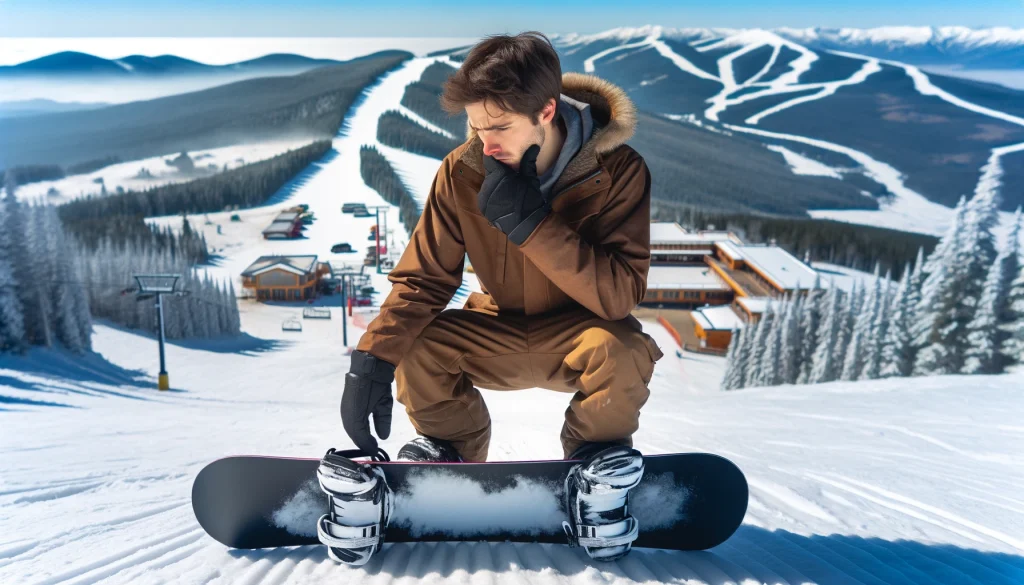
If you feel like your stance is not right, there are three things to check:
- Make decisions based on your dominant eye
- Decide by your dominant foot
- Judging by skating
Make decisions based on your dominant eye
When choosing your stance while snowboarding, checking your dominant eye is also an important factor.
Since snowboarding is a sport where you slide sideways, if your dominant eye is not in the front of your riding direction, you will find it difficult to slide.
The reason for this is that the discrepancy between the visual sensation and the actual feeling of sliding makes it feel difficult to slide.
To avoid slipping, you need to know your dominant eye. Here are some specific ways to do this:
- Look at an object in front of you (such as a plastic bottle or cup)
- Extend your hand forward, point your index finger up, and place it between the object and your eye.
- When you close one eye at a time and compare it with looking with both eyes, you can determine that the eye with the index finger in the correct position is the dominant eye.
Using this method to determine your dominant eye, if your left eye is dominant, the regular stance is appropriate, and if your right eye is dominant, the goofy stance is appropriate.
However, choosing a stance can be complicated depending on your dominant eye and foot combination.
When deciding on your stance, take your dominant eye into consideration and try it out on the slopes.
Decide by your dominant foot
Knowing your dominant foot is also important when deciding on your snowboarding stance.
Your dominant foot is the foot that is easiest to move and kick with, and you can determine it using the following method.
- Foot when kicking the ball
- Crouching start front legs
- The kicking foot when pedaling a bicycle
- The top leg when sitting cross-legged
- The first foot to go up the stairs
The above is considered a guide to determining your dominant foot, and since the back foot is generally involved in controlling the snowboard, it is said that it is easier to slip if your dominant foot is at the back.
In other words, if your dominant foot is left, a goofy stance may be more appropriate, while if it is right, a regular stance may be more appropriate.
However, depending on the combination of your dominant foot and dominant eye, you may have trouble deciding on your stance.
For example, if your dominant eye is left-eye and left-footed.
In that case, you can try adopting a stance that suits your dominant eye.
Ultimately, it's best to try both stances out on the slopes and choose the one that feels easier for you.
Judging by skating
One way to determine if your stance is correct is to skate.
Skating is the technique of moving forward with only your front foot on the board.
A stance that makes skating easy makes it easier to balance even when putting your weight on your front foot, and also makes it easier to maintain balance when turning.
Therefore, ease of skating is an effective way to determine whether or not a stance is suitable.
Specifically, if you find it easier to move using your left foot as your lead foot while skating, then regular stance is likely the right fit for you.
On the other hand, if you find it easier to skate using your right foot as your lead foot, then you can determine that the goofy stance is right for you.
Judging your stance in this way will reduce any discomfort you may feel while skiing.
Stance tips to improve your snowboarding performance
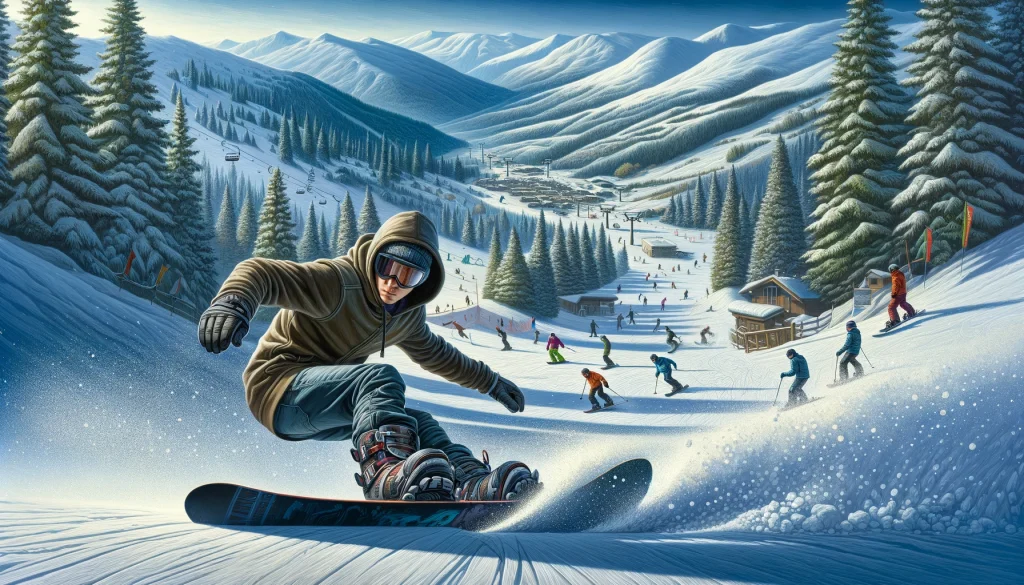
We will explain the following two points regarding stance that will improve your snowboarding performance.
- Balance and Comfort: The Impact of Stance Width
- Beginner to Intermediate: How to Evolve Your Stance Width
Balance and Comfort: The Impact of Stance Width
Setting the right stance width when snowboarding will improve your balance and comfort while snowboarding, reducing fatigue.
A wider stance will give you more stability, but it will also put more strain on your feet.
You may get tired easily, especially on long runs.
This is because spreading your feet reduces the distance to the edge of the board, making it harder to control.
On the other hand, a narrow stance width makes it easier to bend the board and turn.
The reason for this is that when your feet are close together, your force tends to be concentrated in the center of the board.
However, a stance that is too narrow makes it difficult to maintain balance, making it unsuitable for skiing, especially on uneven terrain.
It's important for beginners to start with a relatively narrow stance and find the stance width that suits them best as they gain experience.
Beginner to Intermediate: How to Evolve Your Stance Width
The evolution of stance width is important when progressing from beginner to intermediate.
Beginners usually start with a relatively narrow stance, but as their technique improves, they can widen their stance to provide more stability and control.
When widening your stance, it is generally recommended to move your back leg.
The reason for this is that it is easy to adjust your foot position and you can change it while maintaining balance on the board.
However, if your bindings are centered on the board's central axis (no setback), you should also consider moving your front foot.
A wider stance width is also suitable for technical riding, as it improves stability, especially when landing high speeds and jumps, and makes it easier to turn by flexing the board.
Changing your stance in this way isn't just about adjusting width, it's also a process of finding the optimum balance for your skill level and riding style.
Therefore, the key to improving your skills will be to regularly review your stance and make adjustments as appropriate.
Common stance width and angle problems and solutions
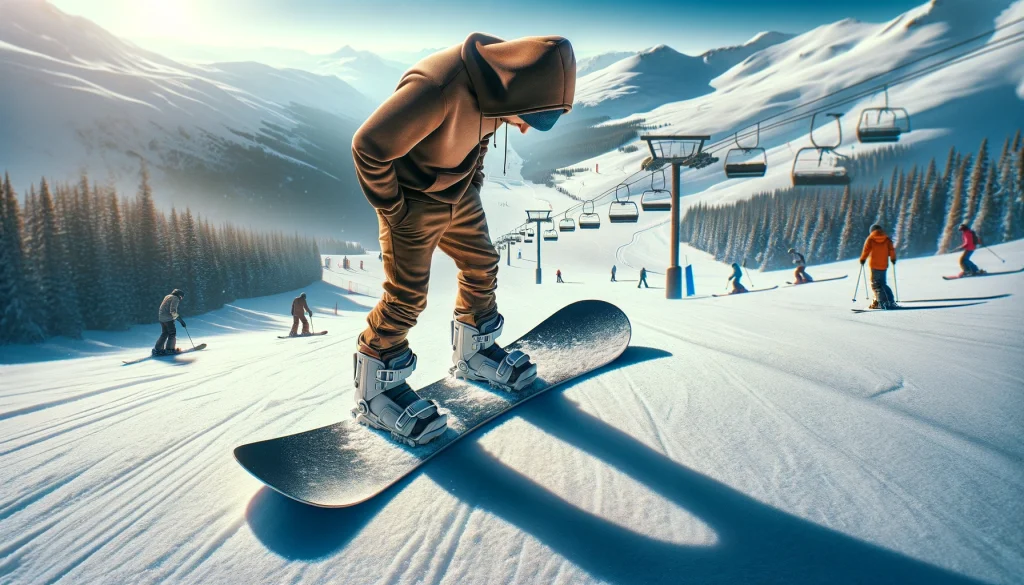
Below we will explain two common stance problems and solutions.
- Common problems caused by improper stance width or angle
- What can be improved by adjusting your stance?
Common problems caused by improper stance width or angle
The appropriate stance width setting should be based on your physique, skill level, and skating style, but most people leave their boards set at the time of purchase for a long time.
Such improper settings will not allow you to make the most of your snowboard's performance and will also affect your progress.
If your stance is too wide, you may feel more stable, but it will put more strain on your feet and make you more likely to tire.
Especially when skiing for long periods of time, your legs can easily become tired, which can lead to a decrease in performance.
Conversely, if your stance is too narrow, you will have difficulty controlling your board and finding balance, especially on uneven terrain.
Also, if the angle of the bindings does not suit your feet, it may be difficult to shift your center of gravity, which can make your skiing unstable.
This is especially noticeable when turning or braking and can increase the risk of falling.
Snowboarders can enjoy a more comfortable and safer ride by finding the stance width and binding angle that suits their physique and riding style.
Therefore, by regularly reviewing your stance and adjusting it as needed, you will be able to improve your performance.
What can be improved by adjusting stance width and angle
Here are some things you can improve by adjusting your snowboard stance width and angle:
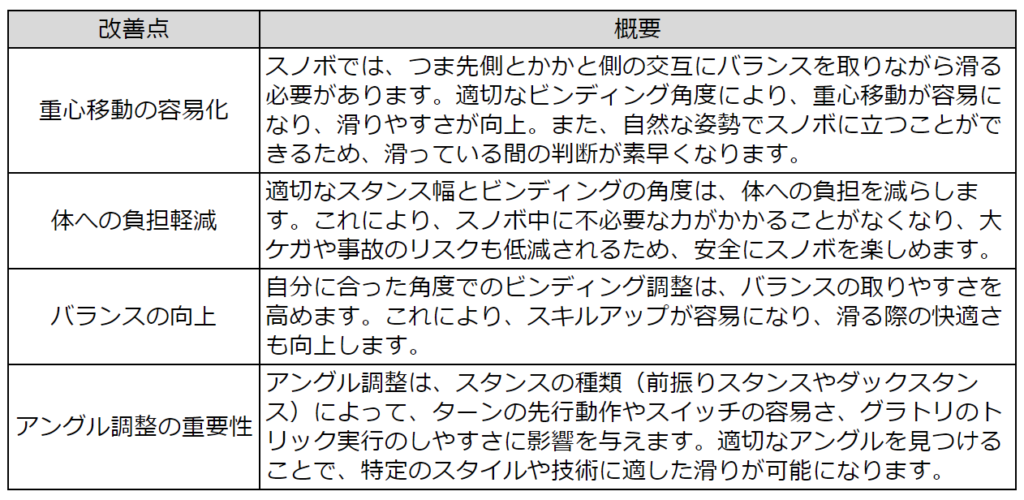
By adjusting your stance based on the above points, you can dramatically improve your snowboarding enjoyment and performance.
Summary of snowboard stance width and angle
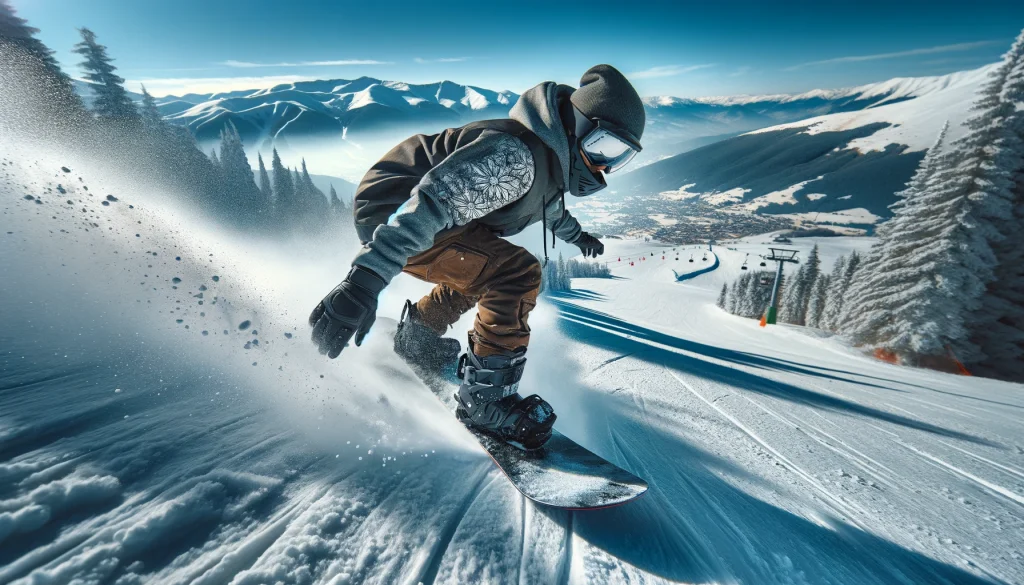
In summary, when snowboarding, it is recommended that you adjust your stance to suit your individual physique, skill level, and riding style.
A wide stance provides stability but puts more strain on your feet.
Conversely, a narrow stance makes it easier to turn and control, but it can also make it harder to maintain balance.
Stance width should be adjusted based on personal preference and your riding style.
Finally, it is important to consider the angle of the binding.
The more the angle is directed outward, the easier it is to move ahead and transfer the twist of your body to the board; a forward stance makes it easier to turn, while a duck stance makes it easier to perform switches and freestyle tricks.
Consider these factors comprehensively and regularly review and adjust your stance.